Why I Started Qigong Every Morning — And Why It Stuck
You don’t need hours of exercise to feel centered. For years, I chased energy with coffee and hustle—until I tried just 10 minutes of morning qigong. It wasn’t magic, but it was consistent. Over time, something shifted: less brain fog, better breath, fewer stress spikes. This is about how a simple, repeatable practice became my quiet anchor—one that fits into real life, not a wellness fantasy. Unlike extreme diets or exhausting workouts, qigong asked for almost nothing and gave back more than expected. It didn’t demand perfection, just presence. And in the middle of a busy household, aging parents, and constant to-do lists, that small daily commitment became a lifeline.
The Burnout That Sparked a Change
For over a decade, mornings began the same way: an alarm blaring at 6:15 a.m., a rushed shower, a travel mug of strong coffee, and a commute through traffic while mentally reviewing the day’s obligations. As a mother of two and part-time administrator at a community center, the rhythm of life rarely paused. By mid-afternoon, fatigue would settle in like a heavy coat—mental exhaustion, aching shoulders, and a sense of being emotionally drained. Sleep rarely felt restorative. Weekends were spent recovering, not recharging.
The turning point came during a routine check-up. My doctor noted elevated blood pressure and mild anxiety, despite no family history of heart issues. She didn’t prescribe medication immediately but asked thoughtful questions: How do you manage stress? When do you rest? What gives you energy? Her concern wasn’t about a single number but a pattern—chronic low-grade stress, poor recovery, and reliance on stimulants to keep going. She suggested exploring holistic approaches that support long-term balance, not just symptom relief.
That conversation sparked a quiet investigation. I began reading about sustainable energy practices, particularly those outside the Western fitness model. I came across traditional Chinese medicine (TCM), which views health not as the absence of disease but as the smooth flow of vital energy, or qi. Unlike symptom-focused medicine, TCM emphasizes prevention, balance, and harmony between body, mind, and environment. What stood out was its focus on daily rituals—small, consistent actions that support resilience. Among the practices, qigong emerged as accessible, gentle, and deeply rooted in this philosophy of energetic balance.
What Qigong Actually Is (And What It Isn’t)
Qigong (pronounced “chee-gong”) is a centuries-old practice from traditional Chinese medicine that combines gentle movement, coordinated breathing, and mindful awareness to cultivate and regulate the body’s vital energy. The word itself breaks down into two parts: qi, meaning life force or energy, and gong, meaning skill or practice. Together, it translates to “energy practice.” At its core, qigong is about learning to listen to the body’s subtle signals and supporting the natural flow of energy through simple, intentional actions.
It’s important to clarify what qigong is not. It is not a high-intensity workout designed to burn calories or build muscle. It does not promise miraculous cures or supernatural abilities. It is not a religious practice, nor does it require belief in any particular system to be effective. While it shares some similarities with yoga and tai chi—such as breath awareness and slow movement—its primary focus is on internal regulation rather than physical flexibility or martial application. Tai chi, for example, evolved from qigong but emphasizes choreographed forms and self-defense. Yoga often focuses on postures and stretching. Qigong, by contrast, prioritizes stillness, breath, and internal sensation over external form.
One of the most misunderstood aspects of qigong is the concept of qi. In Western terms, this might be likened to the body’s bioelectrical system or nervous system regulation. When we feel “drained” or “wired,” it often reflects disrupted energy flow. Qigong helps reset that system through rhythmic breathing, gentle motion, and mental focus. Scientific studies have shown that regular qigong practice can reduce cortisol levels, improve heart rate variability, and enhance parasympathetic nervous system activity—all markers of reduced stress and improved resilience. The practice doesn’t rely on belief; it works through measurable physiological changes.
Why “Quick” Qigong Works for Modern Lives
One of the biggest barriers to wellness routines is time. Many people assume that to be effective, a practice must take 30 minutes or more. But research increasingly supports the idea that short, consistent sessions can yield significant benefits—especially when it comes to nervous system regulation. Qigong fits this model perfectly. Studies have shown that as little as five to ten minutes of daily qigong can improve circulation, lower blood pressure, and enhance mental clarity. Unlike aerobic exercise, which activates the sympathetic nervous system (the “fight or flight” response), qigong gently stimulates the parasympathetic system—the “rest and digest” mode—making it ideal for starting the day with calm intention.
What makes qigong uniquely suited to modern life is its low barrier to entry. No special equipment, clothing, or gym membership is required. It can be practiced standing, sitting, or even lying down. There is no need for prior experience or physical flexibility. A quiet corner of a bedroom, a patch of sunlight by a window, or even a parked car before work can become a space for practice. Because it’s not performance-based, there’s no pressure to “do it right.” The goal isn’t perfection but presence—showing up with awareness, even if only for a few minutes.
For busy women managing households, careers, and caregiving responsibilities, this accessibility is transformative. It doesn’t require carving out large blocks of time or disrupting family routines. Instead, it integrates seamlessly into the margins of the day. Many practitioners report that the stillness cultivated in these brief sessions spills over into other areas—better focus at work, more patience with children, improved emotional regulation during stressful moments. The cumulative effect is not dramatic, but steady: a growing sense of inner stability amid life’s constant motion.
How Routine Regularity Transforms Small Efforts
The true power of qigong lies not in intensity but in consistency. Unlike high-effort workouts that may be abandoned after a few weeks, qigong thrives on repetition. The body learns to recognize the signals of calm and gradually becomes more responsive to them. This is supported by circadian science: the human body naturally experiences a rise in energy in the early morning hours, making it an ideal time to engage in practices that support alertness without agitation. Morning qigong aligns with this natural rhythm, helping to gently awaken the system rather than jolt it with caffeine or screens.
Within the first two weeks of daily practice, I noticed subtle shifts. My breathing felt deeper, especially during moments of stress. I was less reactive to minor frustrations—like spilled milk or a missed appointment. Sleep improved, not because I was more tired, but because my nervous system was better regulated. By the fourth week, I began to feel a quiet sense of grounding that lasted throughout the day. These changes weren’t dramatic, but they were consistent. Over time, I developed greater body awareness—recognizing tension in my shoulders before it turned into a headache, noticing shallow breathing before it led to anxiety.
This growing sensitivity is one of qigong’s most valuable outcomes. It teaches us to listen to our bodies before problems escalate. Rather than waiting for burnout or illness to force a pause, we learn to respond to early signals of imbalance. This preventive mindset is central to traditional Chinese medicine and stands in contrast to the reactive approach common in modern healthcare. By dedicating just a few minutes each morning to stillness and breath, we build a foundation of resilience that supports all areas of life—from decision-making to emotional well-being to physical health.
My Simple 3-Part Morning Routine (And How Anyone Can Start)
After experimenting with various forms, I settled on a short, repeatable sequence that feels both grounding and energizing. It takes about ten minutes and can be adjusted based on time and energy levels. The routine consists of three parts: Standing Like a Tree (Zhan Zhuang), Lifting the Sky, and Abdominal Breathing. Each component serves a specific purpose and builds on the previous one.
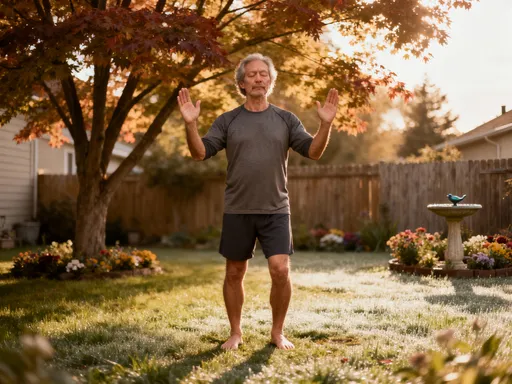
The first part, Standing Like a Tree, is a foundational qigong posture that cultivates stillness and body awareness. I stand with feet shoulder-width apart, knees slightly bent, arms rounded as if hugging a large ball. The spine is relaxed but upright, the shoulders soft, the gaze gentle. For three minutes, I focus on feeling the connection between my feet and the ground, imagining roots extending into the earth. This posture activates the lower dantian (the body’s energy center below the navel) and helps anchor the mind. If standing is difficult, this can be done seated with feet flat on the floor and hands resting on the lap.
The second part, Lifting the Sky, introduces gentle movement to circulate energy. With slow, deliberate motions, I raise my hands in front of the body, palms up, as if lifting an invisible ball overhead. At the top, I imagine gathering light or fresh energy, then slowly lower the hands back down, palms turning down as if releasing tension. This is repeated for four minutes, synchronized with the breath—inhaling as the hands rise, exhaling as they fall. The movement is minimal, almost meditative, and encourages fluidity in the joints and breath.
The third part, Abdominal Breathing, focuses on deep diaphragmatic breath. I place one hand on the belly and breathe slowly, allowing the abdomen to rise on the inhale and fall on the exhale. For three minutes, I count each breath—inhale for four, exhale for six—extending the exhale to activate the parasympathetic nervous system. This simple technique has been shown to reduce heart rate and calm the mind. If time is short, I may shorten each segment to two minutes or combine two parts on particularly busy mornings.
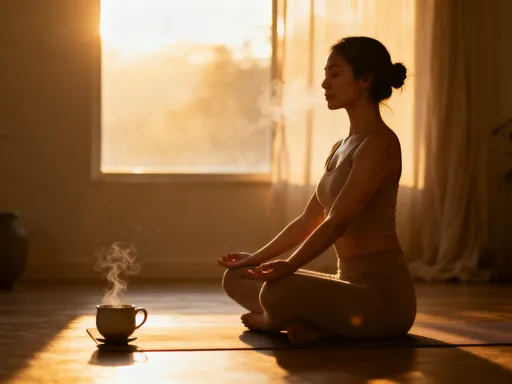
The key to success has been timing: I practice immediately after waking, before checking my phone or opening email. This protects the space from distractions and sets a calm tone for the day. I’ve found that pairing it with another morning habit—like brewing tea or brushing my teeth—helps reinforce consistency. Over time, the routine has become automatic, like brushing my teeth: not something I debate, but something I simply do.
Common Obstacles—and How to Move Past Them
Like any new habit, qigong comes with challenges. The most common obstacle is skepticism. Many people, especially at first, say, “It feels too slow” or “I don’t notice anything happening.” This is normal. Unlike intense exercise, which produces immediate physical feedback, qigong works subtly, often below the level of conscious awareness. The benefits accumulate over time and are more easily noticed in retrospect—like realizing you haven’t had a tension headache in weeks.
Another challenge is motivation. On tired mornings, it’s tempting to skip the practice and reach for coffee instead. When this happens, I remind myself that even two minutes counts. Perfection is not the goal; showing up is. I’ve learned to adjust the routine based on energy levels—shorter sessions, seated versions, or focusing only on breathing when time is tight. The flexibility of qigong makes it sustainable precisely because it doesn’t demand rigid adherence.
Time constraints are also a frequent concern. But most people spend more than ten minutes scrolling through social media or checking emails each morning. By shifting that time, even partially, to qigong, the practice becomes feasible. Habit-stacking has been especially helpful: I now link my qigong to making my morning tea. While the water heats, I stand and breathe. It’s not an extra task; it’s woven into an existing routine. Over time, the association strengthens, and the desire to skip it diminishes.
Beyond the Morning: Building a Sustainable Wellness Mindset
Qigong has taught me that wellness is not a destination but a daily practice. It’s not about achieving peak performance or looking a certain way. It’s about learning to live in harmony with your body’s natural rhythms and honoring your energy levels. This mindset extends beyond the morning routine. I’ve become more attuned to when I need rest, when I can push forward, and when I should simply pause. This self-awareness has improved my relationships, my work, and my overall sense of well-being.
Small rituals, repeated over time, build resilience. They create a foundation that supports us through life’s inevitable stresses. Unlike quick fixes or extreme regimens, qigong offers a sustainable path—one that doesn’t require drastic changes but invites gentle, consistent attention. It’s not about adding more to your plate but about being present with what’s already there.
In a world that glorifies busyness and speed, choosing slowness can feel radical. But in that slowness, there is strength. There is clarity. There is peace. Qigong didn’t transform my life overnight. But by showing up each morning, even briefly, I’ve built a deeper relationship with my body’s rhythms. It’s not about perfection—it’s about presence. And in the quiet moments before the day begins, that presence becomes a quiet anchor, holding me steady, one breath at a time.