Lost in the Jungle: When Amazonian Architecture Isn’t What You Expected
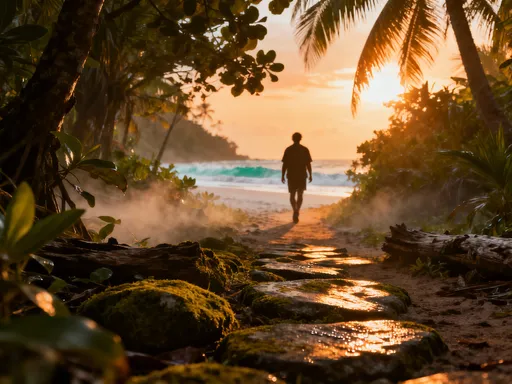
Trekking through the Amazon in Brazil, I thought I’d find grand ancient ruins or futuristic eco-lodges. Instead, I discovered something far more surprising—structures shaped by nature, not blueprints. You won’t see towering temples, but the way local communities build with bamboo, palm thatch, and elevated stilts is absolutely mind-blowing. This isn’t architecture as we know it—it’s survival turned art. And honestly? Most travelers miss it completely. What I found was not a lack of design, but a different philosophy: one where buildings breathe, adapt, and return to the earth when their time is done. In a world obsessed with permanence, the Amazon teaches us that wisdom often lies in impermanence.
The Myth of Monumental Ruins in the Amazon
When most people imagine ancient architecture in remote jungles, their minds turn to stone temples, stepped pyramids, or sprawling lost cities swallowed by vines. These images, popularized by films and adventure novels, shape expectations for travelers heading into the Brazilian Amazon. Yet the reality could not be more different. There are no grand ruins hidden beneath the canopy—no limestone palaces or carved monoliths. The rainforest’s humidity, acidity, and relentless biological activity break down organic matter quickly, and even stone structures, if they once existed in large numbers, have long since crumbled or been reclaimed by vegetation.
Instead of monumental permanence, the Amazon offers a different kind of legacy: architecture designed not to last forever, but to serve its purpose in harmony with the environment. This is not a failure of development or sophistication, but a deliberate choice rooted in ecological awareness. Indigenous communities have never sought to dominate the landscape. Their buildings are part of a cycle—constructed from the forest, used for years, then allowed to decompose and return nutrients to the soil. This impermanence is not a weakness; it is a strength.
The absence of stone ruins does not mean the absence of advanced knowledge. On the contrary, the architectural intelligence found in the Amazon is deeply embedded in function, climate adaptation, and social structure. Homes are engineered to withstand seasonal floods, resist insect infestations, and maximize airflow in oppressive heat. Communal spaces are arranged to support collective living, storytelling, and spiritual practices. What may appear as simple shelters to an untrained eye are, in fact, the result of centuries of trial, observation, and refinement. The true marvel lies not in height or scale, but in the quiet precision of design that responds perfectly to its surroundings.
The Living Logic of Indigenous Design
In the heart of the Amazon, architecture is not a standalone discipline—it is woven into the fabric of daily life, culture, and survival. Communities such as the Ticuna, Yanomami, and Kayapó have developed building traditions that reflect an intimate relationship with the rainforest. Their homes, especially the large communal longhouses known as malocas, are masterclasses in environmental adaptation. These structures can stretch over 30 meters in length and house multiple families, yet remain cool, dry, and well-ventilated despite the humid conditions.
The design of a maloca is never arbitrary. Its orientation is carefully chosen to align with wind patterns, allowing natural breezes to flow through the open sides and carry away heat and insects. The high, sloping roofs create a chimney effect, drawing hot air upward and out, while the wide eaves protect the interior from heavy rains. The central pole, often made from a single durable tree trunk, symbolizes the connection between earth and sky, anchoring both the structure and the community’s spiritual beliefs.
Social organization is mirrored in spatial arrangement. The center of the maloca is reserved for communal activities—ceremonies, meals, and gatherings—while individual family spaces are positioned along the perimeter. This layout fosters unity and shared responsibility, reinforcing the collective values that sustain these societies. Even the entrance is strategically placed, often facing east to welcome the morning sun, a detail that reflects both practicality and cultural symbolism.
What makes this architecture truly remarkable is its resilience. These communities do not rely on imported materials or industrial tools. Every element is sourced locally, shaped by hand, and assembled using techniques passed down through generations. The knowledge embedded in these designs is not written in textbooks—it is lived, taught through practice, and refined over time. In a world increasingly dependent on technology, the maloca stands as a testament to the power of ancestral wisdom.
Materials That Breathe With the Forest
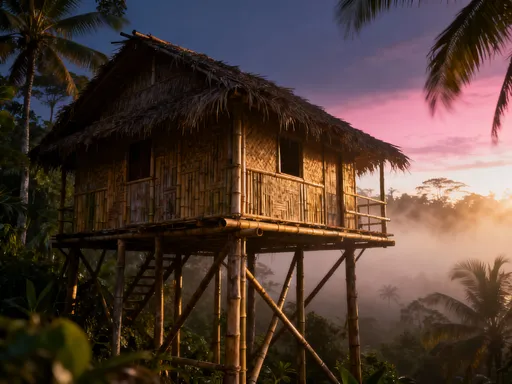
Amazonian construction relies entirely on what the forest provides. Builders use species such as paxiúba and caranã for posts and beams, selected for their resistance to rot and termites. Bamboo is favored for its strength, flexibility, and rapid growth, making it both sustainable and ideal for framing walls and floors. Palm leaves—especially from the buriti and açaí palms—are expertly layered to form thick, waterproof thatch roofs that can last up to ten years with proper maintenance.
These materials are not chosen at random. Each has specific properties that make it suitable for particular roles. For example, certain vines are used as natural lashing, replacing nails and screws. They tighten as they dry, creating secure joints that flex with the movement of the structure. Clay is sometimes mixed with plant fibers to create plaster for walls, improving insulation and reducing insect entry. Even the process of harvesting is sustainable—trees are felled selectively, and new saplings are often planted in their place.
Unlike concrete or steel, which trap heat and require massive energy to produce, natural materials interact dynamically with the environment. Wood expands and contracts with humidity, allowing structures to “breathe.” Thatch roofs insulate against heat while permitting airflow, preventing mold and mildew. When a building reaches the end of its life, it decomposes without leaving behind toxic residues or waste. There is no need for demolition—only return.
This deep understanding of material science is not taught in formal schools but learned through observation and practice. Young members of the community begin assisting with construction in childhood, gradually mastering the skills needed to build and maintain their homes. The result is a system of architecture that is not only functional but regenerative—a closed loop where nothing is wasted, and everything has a purpose.
Elevated Structures: Why Everything is Built Off the Ground
One of the most distinctive features of Amazonian architecture is the widespread use of stilted construction. Nearly every home, storage hut, and communal building is raised above the forest floor, sometimes as high as three meters. At first glance, this may seem like a cultural tradition with symbolic meaning. In reality, it is a critical survival strategy shaped by the region’s extreme environmental conditions.
The Amazon experiences dramatic seasonal flooding. During the rainy months, rivers swell and inundate vast areas of lowland forest. Ground-level structures would be submerged, damaged, or swept away. By elevating homes, communities protect their living spaces, possessions, and food stores from rising waters. The height of the stilts is calculated based on historical flood levels, ensuring safety even during peak inundation.
But flood protection is only one benefit. The forest floor is also home to venomous snakes, scorpions, and biting insects. Raising the living area reduces the risk of dangerous encounters. Additionally, damp soil promotes mold, rot, and fungal growth, which can compromise both health and structural integrity. Elevating the building allows air to circulate freely beneath it, reducing moisture buildup and keeping the interior dry.
The engineering behind these supports is surprisingly sophisticated. Builders use angled braces and diagonal reinforcements to stabilize the structure on soft, uneven terrain. In some cases, the stilts are anchored into deeper, more compact soil layers or secured with natural fiber ropes tied to surrounding trees. The spacing between supports is carefully planned to distribute weight evenly and prevent sinking. These solutions are not improvised—they are the result of generations of experimentation and adaptation.
Even storage platforms are elevated, often with conical roofs to keep food dry and protected from rodents. These raised granaries are essential for preserving crops like manioc, bananas, and maize between harvests. In every detail, the design prioritizes resilience, safety, and long-term usability—proof that simplicity in form does not mean simplicity in thought.
The Pitfall of Expecting Modern Amenities
Many travelers arrive in the Amazon with expectations shaped by luxury eco-tourism marketing. They anticipate glass-walled bungalows, infinity pools overlooking the river, and high-speed Wi-Fi in the middle of the jungle. When they encounter traditional stilt houses with thatched roofs and open sides, they often dismiss them as “primitive” or “basic.” This mindset reflects a fundamental misunderstanding of what sustainable, culturally authentic architecture looks like.
Authentic Amazonian design does not prioritize comfort as the modern world defines it. There are no air conditioners, no sealed windows, no artificial lighting beyond oil lamps or solar-powered LEDs. Yet these homes are perfectly adapted to their environment. The open layout promotes cross-ventilation, eliminating the need for mechanical cooling. Natural shading from wide eaves and surrounding trees keeps interiors bearable even at midday. The materials absorb and release moisture gradually, stabilizing indoor humidity.
When tourists choose accommodations based on Instagram appeal rather than ecological and cultural integrity, they risk supporting developments that harm the very environment they came to see. Glass walls trap heat, requiring energy-intensive cooling. Concrete foundations disrupt soil drainage and prevent natural regeneration. Imported materials must be transported long distances, increasing carbon emissions. Worse, these designs often isolate guests from the local community, turning cultural exchange into a staged performance.
The most meaningful travel experiences come not from luxury, but from connection. Staying in a traditionally built maloca, even briefly, offers insight into a way of life that values harmony over convenience. It allows visitors to feel the rhythm of the forest—the sound of rain on palm thatch, the coolness of evening breezes, the quiet hum of life all around. These sensations cannot be replicated in a modernized lodge, no matter how many amenities it boasts.
Eco-Lodges Caught Between Worlds
In recent years, a growing number of eco-lodges have emerged in the Amazon, aiming to balance sustainability with visitor comfort. Some have succeeded in creating spaces that honor traditional design while offering basic modern conveniences. Others, however, fall into the trap of “faux authenticity”—adopting the appearance of indigenous architecture without understanding its underlying principles.
A successful example is a lodge built in collaboration with a local community, using hand-hewn timber, thatched roofing, and stilted foundations. Solar panels provide limited electricity, and composting toilets minimize environmental impact. Guides are trained from within the village, ensuring that cultural knowledge is shared accurately and respectfully. In this model, tourism becomes a tool for preservation, not erosion.
In contrast, some so-called eco-lodges use concrete stilts, metal roofing, and imported furniture, merely adding a thatched roof as a decorative afterthought. These structures may look rustic from a distance, but they fail to function like true Amazonian buildings. Metal roofs absorb heat, making interiors unbearably hot. Concrete prevents natural drainage and kills surrounding vegetation. Without proper ventilation, humidity builds up, leading to mold and discomfort.
The difference lies in intention and involvement. When designs are led by outside architects with little input from indigenous builders, the result is often a hybrid that satisfies neither ecological nor cultural standards. True sustainability requires more than aesthetics—it demands participation, respect, and a willingness to learn. The most effective projects are those where communities are not just employees, but co-creators, shaping the future of tourism on their own terms.
Rethinking Beauty in Amazonian Building
The architecture of the Amazon challenges everything we think we know about beauty, progress, and permanence. It does not dazzle with size or shine. It does not seek to impress, dominate, or endure. Instead, it whispers—a quiet demonstration of how humans can live in deep partnership with nature. Its brilliance lies in its restraint, its intelligence, its humility.
Travelers who come seeking ruins or luxury resorts may leave disappointed. But those who slow down, observe, and listen will discover something far more valuable: a philosophy of living that prioritizes balance, resilience, and respect. The maloca is not just a building—it is a worldview made visible. The stilted home is not a temporary shelter—it is a statement of coexistence.
As climate change accelerates and cities grapple with sustainability, the wisdom of Amazonian architecture becomes increasingly relevant. It shows us that innovation does not always mean new technology—it can also mean honoring old knowledge. It reminds us that the most durable solutions are not always the hardest, but the most adaptable.
For the mindful traveler, especially those who value depth over spectacle, the Amazon offers a rare gift: the chance to witness a different kind of greatness. One that does not rise above the trees, but grows quietly among them. By letting go of expectations shaped by other cultures, we open ourselves to true understanding. And in that space, we may finally learn to build not against nature—but with it.